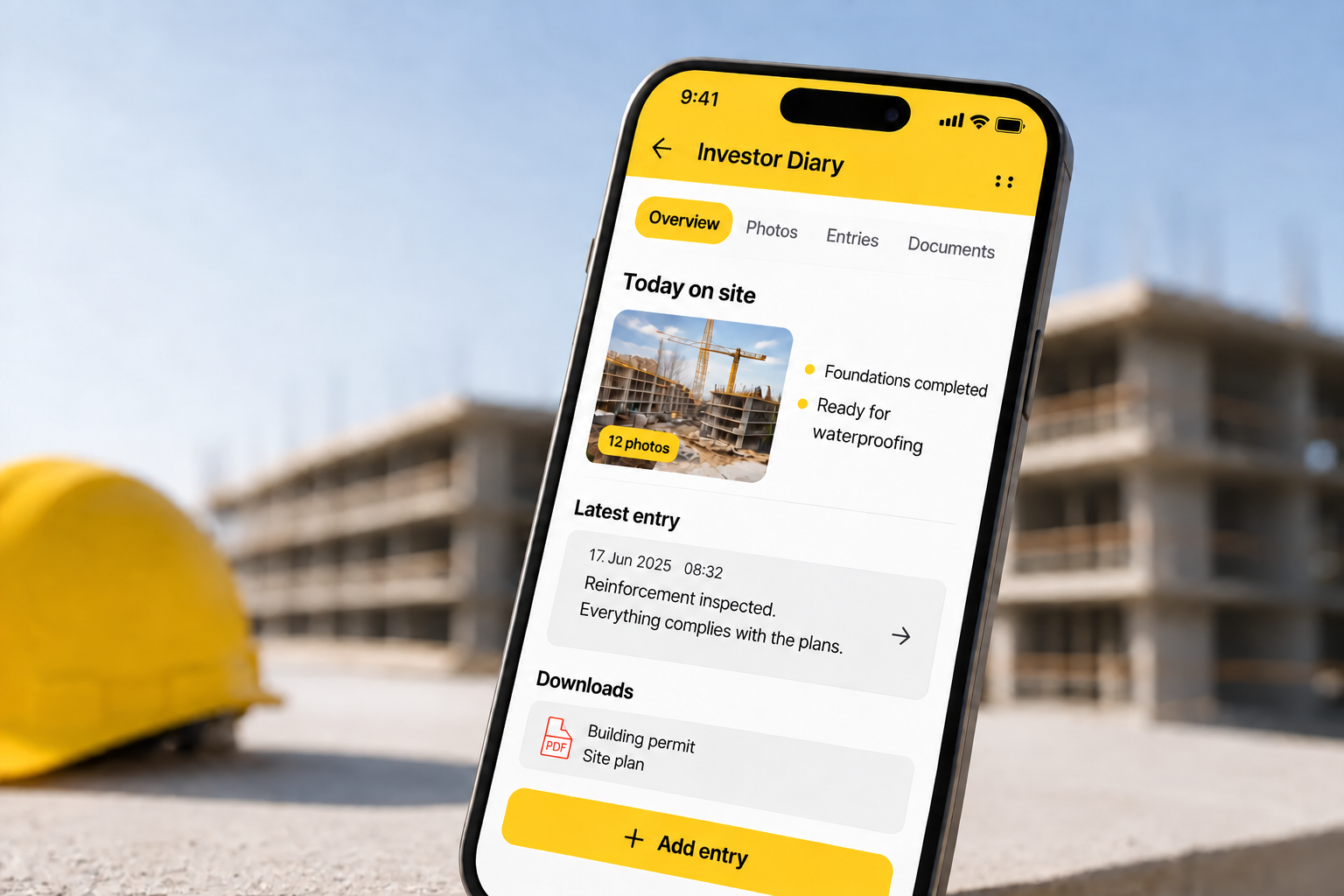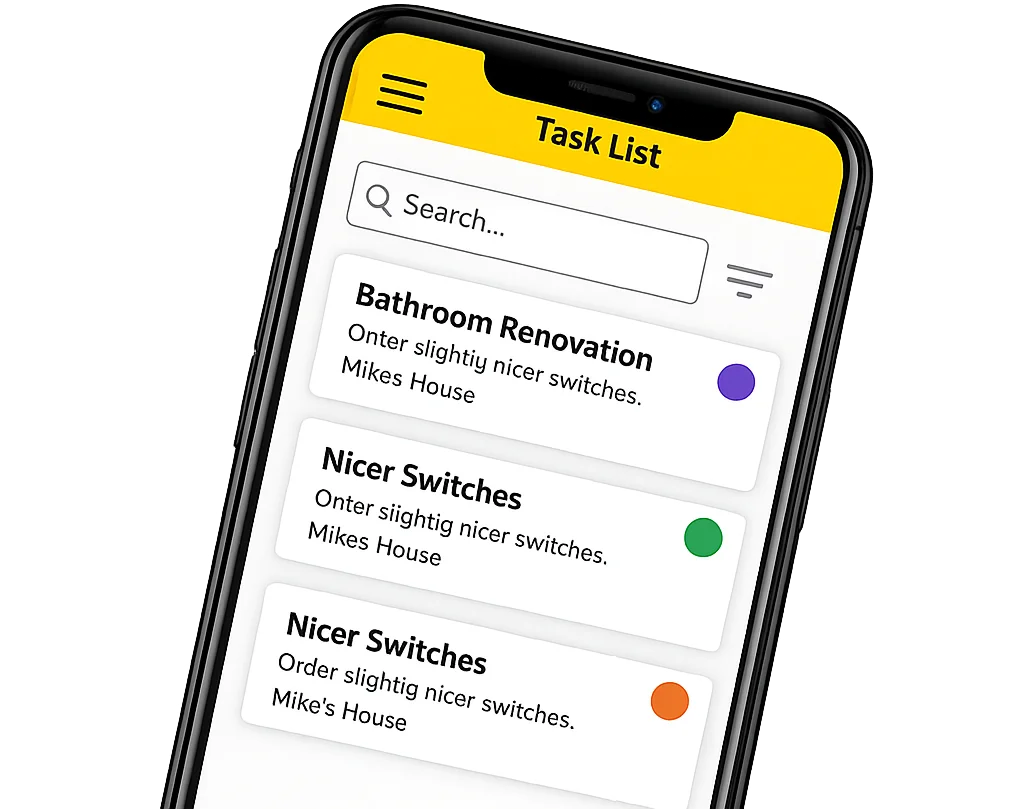
Most construction teams already take more than enough photos. The problem comes later, when someone needs one specific image: an installation before it was covered, a defect before correction, a delivery from a certain day or the condition of work months earlier. Good construction photo documentation is not about taking more pictures. It is about making sure the important ones keep their context.
Construction sites produce photographs almost continuously. A site manager records a delivery, a foreman photographs services before a wall is closed, a worker sends a picture of a defect. Progress photos go to the client, corrections are documented and details are captured before the next trade covers them. At the time, every image makes sense. Three months later, the situation can be very different.
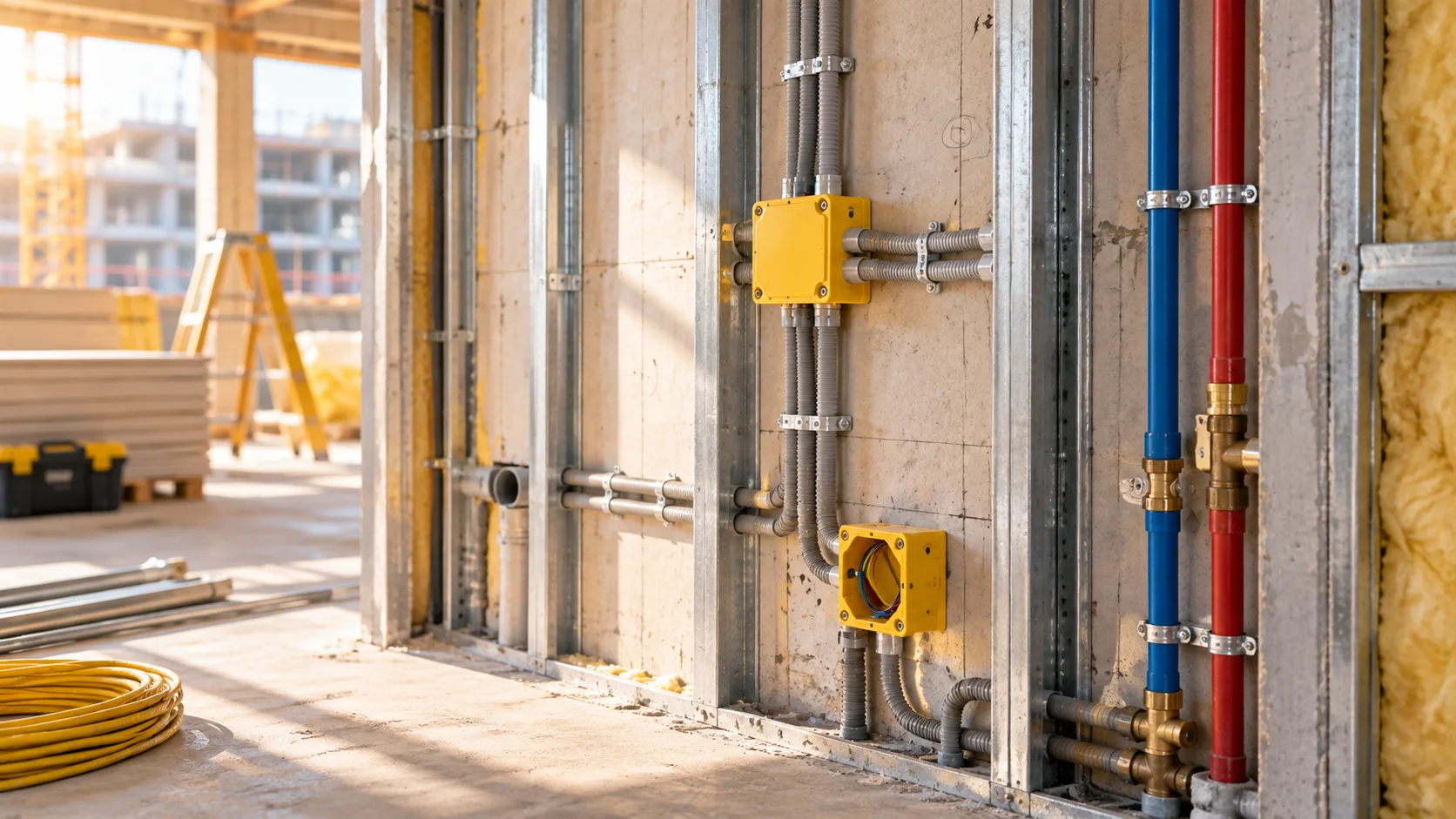
Someone needs a photograph of pipework before it disappeared behind a finished wall. Everybody remembers that the photo exists. Nobody remembers exactly who took it, or on which day, or whether it was sent in the site WhatsApp group, stored in somebody's camera roll, uploaded to a folder or attached to a project record. The photograph was created, but the evidence was effectively lost. That is why good construction photo documentation does not start with the camera. It starts with context.
A construction photo without context becomes just another image
A photograph can show a surprising amount: reinforcement, services, waterproofing, damage, a finished detail, a delivery, progress on a particular part of the job. What it may not show is everything around that image. Which project is this? Which part of the building? When was it taken? Was it before or after correction? Was the photograph documenting a defect, an inspection or ordinary progress? Was the work about to be covered?
A photo that looks obvious on the day it was taken may be much less obvious six months later, and it may be completely unclear to somebody who was not there. Context is what turns an image into a useful project record. At the simplest level, that means project and date. In many cases, even more value comes from connecting the photo with the reason it exists: a daily log, a task, a defect, an inspection or a specific event. Then the team does not have to remember the file. It can remember the situation.
WhatsApp is excellent at sending photos and poor at becoming a project archive
Messaging apps are popular on construction sites for a very good reason. They are fast. A worker sees a problem, takes a photograph and sends it to the site manager within seconds. For communication, that can work extremely well. For long-term project records, it is much less reliable. One group may contain photographs, questions, instructions, documents, jokes, delivery updates and several separate conversations happening at the same time. Months later, finding one particular photograph can become an exercise in memory. Who sent it? Roughly when? What were people talking about around that time? Which group was it in?
Many contractors also have several groups around one project: internal team, client, subcontractors and specific trades. The photograph may still exist somewhere, but that does not mean the business has organised photo documentation. Communication and documentation solve different problems. A messaging app can remain a useful communication channel, while important project evidence needs somewhere more permanent to live.
Taking the photo is only the first half of the job. A construction image becomes useful evidence when the team can later identify the project, date and situation it relates to without asking the person who took it.
What is actually worth photographing on a construction site?
The easiest way to create a useless photo archive is to photograph everything without any principle behind it. Hundreds of similar images accumulate and the important photographs become harder to find. A better approach is to identify situations where an image may have genuine future value.
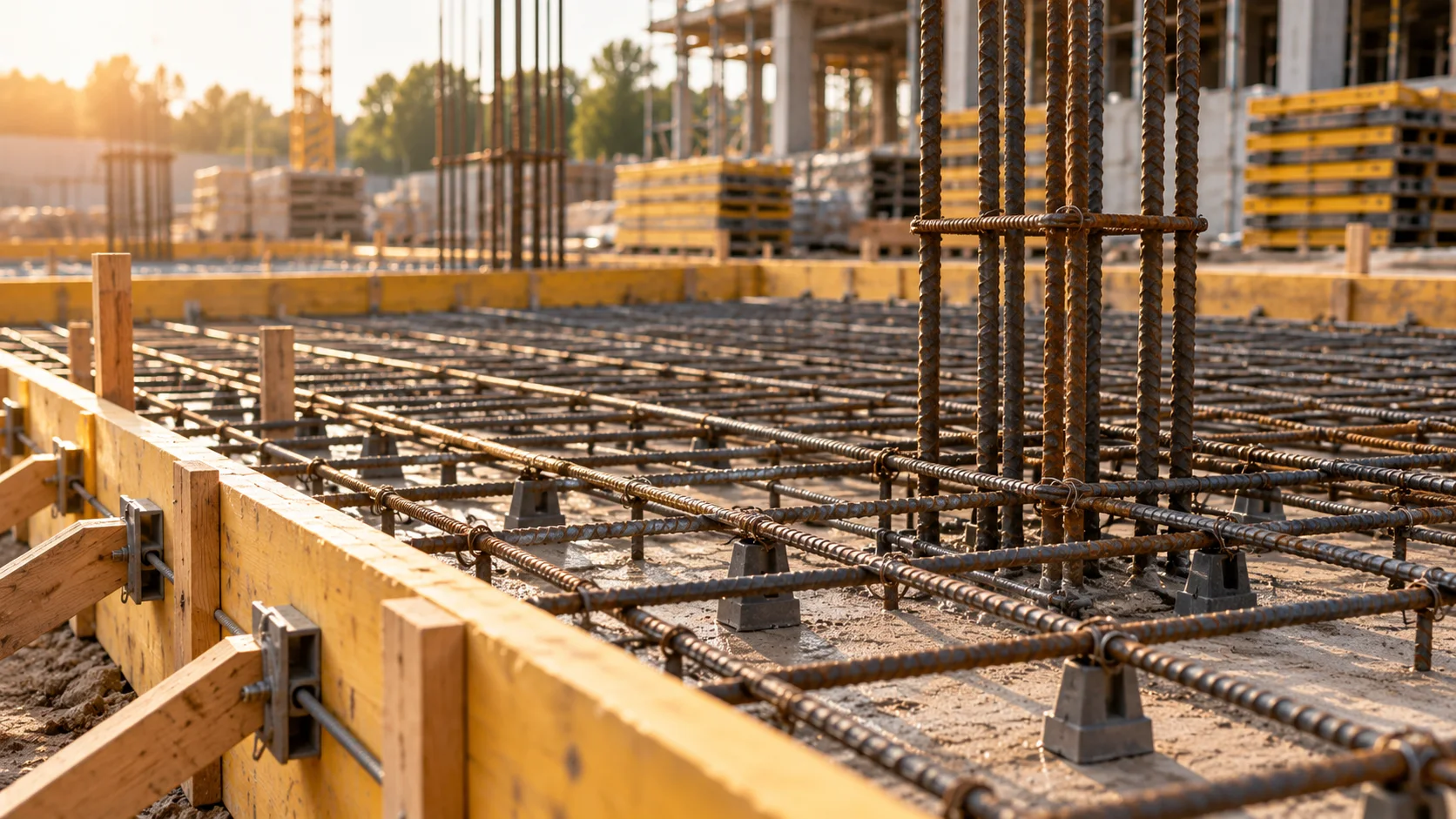
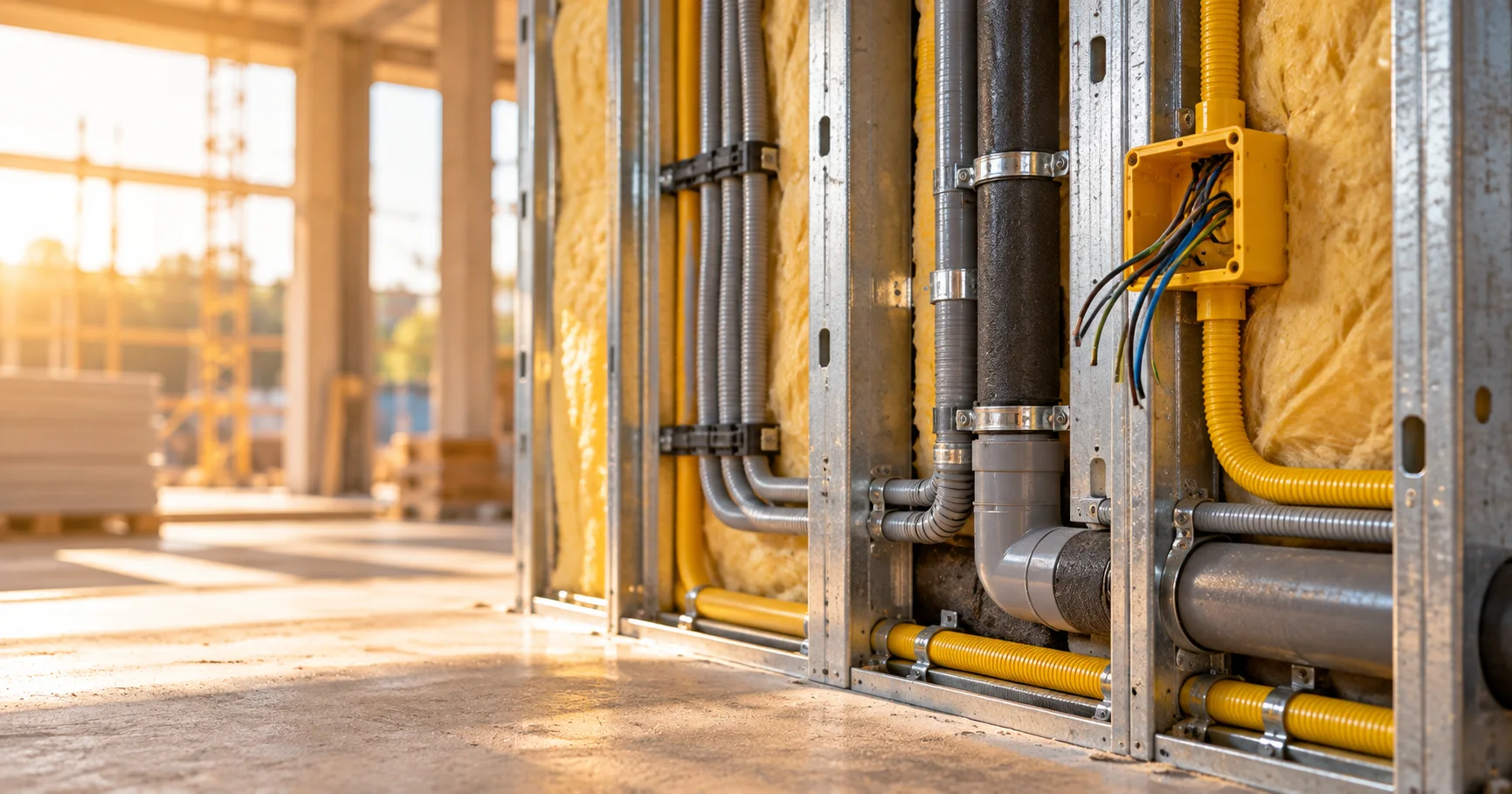
The first category is concealed work. Services before walls or ceilings are closed, reinforcement before concrete is poured, waterproofing before the next layer, drainage before backfilling, fixings or structural details that will soon disappear from view. These photographs preserve information that may become physically impossible to inspect later without opening the finished construction.
The second category is important stages and handovers: condition before work begins, condition after completion, work before another trade takes over, a completed correction, a section immediately before inspection. The third category is defects, damage and unexpected conditions: a damaged delivery, an incorrectly completed detail, an existing condition discovered during work, a clash between services, a surface that prevents the planned work from continuing. The fourth category is progress. Not every day needs dozens of generic progress photographs, but well-chosen images can later help establish how a project developed at a particular stage or date.
The principle is simple: photograph the moments the business may later need to explain.
Take the photograph before the evidence disappears
Some of the most valuable construction photographs are valuable precisely because they cannot be recreated later. An installation is complete, the next trade is ready and the wall is about to close. If nobody documents the services before boarding, that opportunity disappears. The same applies to reinforcement before concrete, waterproofing before covering and many other concealed works.
This sounds obvious. It is also very easy to miss when everybody is focused on keeping the job moving. That is why photographs of concealed work should be part of the process rather than an optional afterthought. Document first, continue next. The same principle works around key inspections and handovers. Take the photograph while the condition is still visible, not after somebody asks for it, not at the end of the week and not when the project manager starts building a report. The most valuable photo is often the one taken at the only moment when that evidence existed.
More photos do not automatically create better evidence
Phones have removed almost all friction from taking photographs. That is useful, but it also creates noise. A site manager takes eight nearly identical images, a worker sends another five, a subcontractor sends four more. The project now has seventeen photos of roughly the same thing. The archive is larger. The evidence is not necessarily stronger.
Good documentation should show what matters. For an important condition, a useful photo set may include:
- one wider image that establishes location and context,
- one closer image that shows the work clearly,
- one detail image where a specific point needs to be recorded.
Those photographs answer different questions. That is different from taking ten almost identical shots and assuming quantity equals certainty. The objective is not maximum image volume. It is enough visual information to understand the condition later.
Think about the question the photo may need to answer
One useful way to improve construction photography is to stop thinking only about what is in front of the camera and start thinking about the future question. Was the pipework installed before the wall was closed? What did the substrate look like before this work started? Was the damage already visible when the material arrived? Was the correction actually completed? What was behind the finished surface? What did this area look like on the date the delay was discussed?
This changes the photograph. You are no longer simply recording progress, you are creating evidence that may later answer a specific question. It also helps reduce unnecessary photos. If it is difficult to explain what future question the image might answer, it may not need to become part of formal documentation. Not every site photograph needs to be evidence, but important evidence should be intentional.
File names are less important than project context
In theory, every construction photo could receive a perfect file name. Something like Level-2-bathroom-services-before-close-2026-09-05.jpg would make an archive beautifully organised. It is also unrealistic for many site teams. A worker who has just taken five photos before closing a wall does not want to spend several minutes renaming every file, and a system that depends on perfect manual file naming will usually deteriorate.
The more useful principle is to make the context easy to capture: project, date, entry, task, event, location or section where genuinely useful. If the photograph is created directly inside the right project context, a generic camera filename becomes much less important. IMG_4829 is not a good description, but it is no longer disastrous if the system already knows which project and record it belongs to. Good construction documentation should not depend on people behaving like archivists while they are trying to build.
The photo should belong to the project from the moment it is created
A huge amount of unnecessary administrative work appears because construction photographs are organised later. At the end of the week, somebody exports images from a phone, selects the important ones, moves them to project folders, tries to remember which day they belong to and checks whether an image came from Project A or Project B. This is classic duplicated work. The information existed at the moment the photograph was taken, and the project context is being added afterwards.
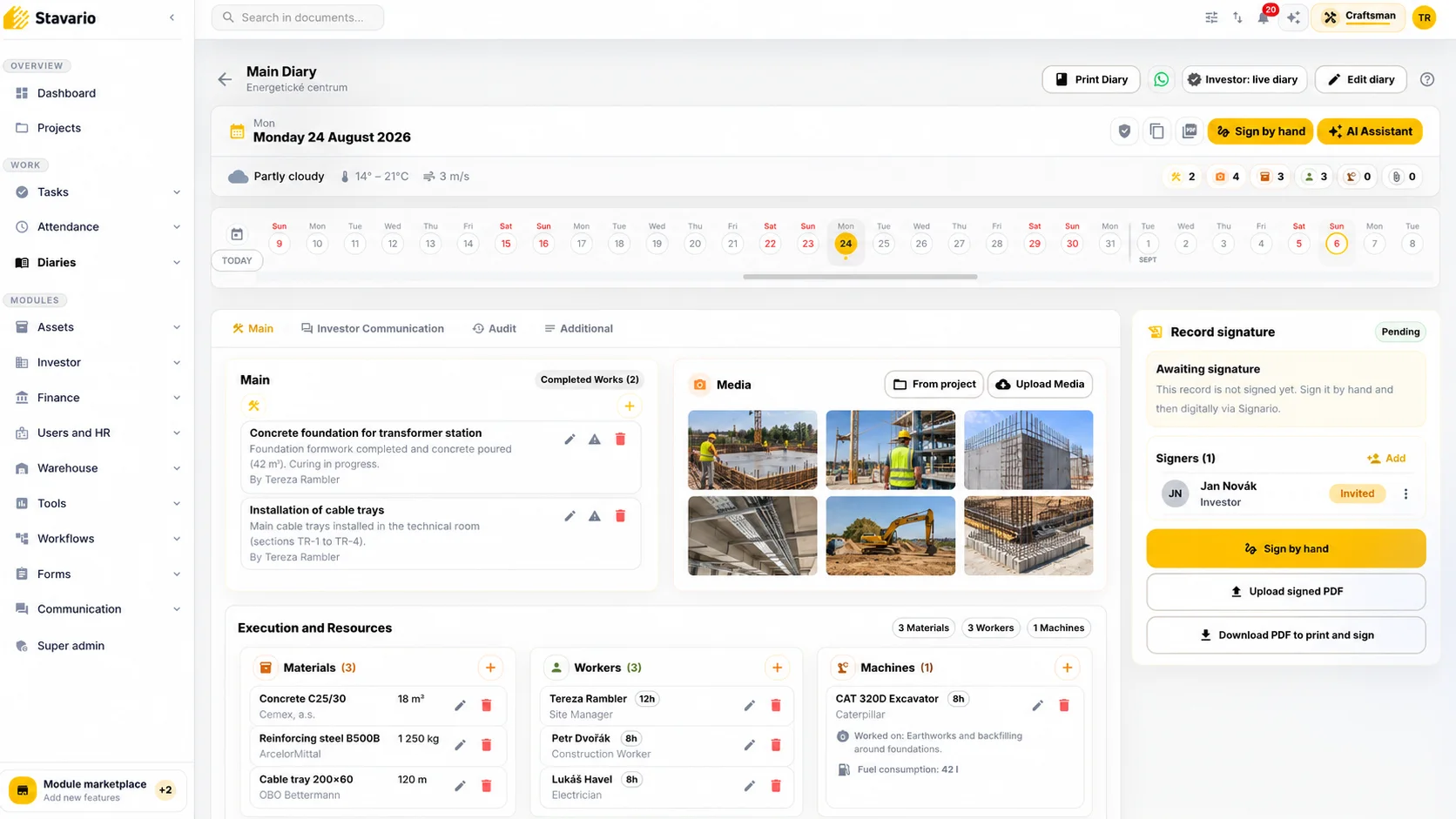
If the image can be captured directly within the correct project, much of that organisation happens naturally. There is no later step called “put the photos into the documentation”. They already are project documentation, alongside the construction log for the same day. This becomes especially useful when site managers move between several projects, a situation we covered in more detail in the article on managing multiple construction projects without losing control. A camera roll from one week may contain images from three or four jobs, and after a few days visual memory is already less reliable than people expect. Project context removes much of that uncertainty at source.

Can someone other than the photographer find the image?
This is one of the best tests of construction photo documentation. Choose an important photograph from three months ago. Not a marketing image, not the project hero shot, but something operational: a concealed service, a defect, a repair or a delivery issue. Then ask somebody who did not take the photo to find it. Give them the project, approximate timing and the reason the photograph exists, but not the photographer's name. Then measure the time.
If they can reach the relevant images quickly, the documentation is working. If they need to search private phones, multiple chat histories and several folders, the company has plenty of photographs but weak retrieval. That difference matters. A project record is valuable only if somebody can recover the information when it becomes relevant. The best archive is not the biggest one. It is the one that answers the question quickly.
Photos should not live separately from the event they document
A photograph becomes much more useful when it is connected with other project information. A defect is identified, a photo is taken, a corrective task is created, the work is completed and a second photograph records the corrected condition. That creates a sequence: issue, responsibility, correction, result. Two random photographs in a camera roll do not provide the same clarity.
The same applies to daily construction records. A set of project photos connected with the day's activity makes much more sense than the same photographs separated from the information about what was happening. This is why photo management should not necessarily be treated as a separate module. Images are evidence inside other construction processes: tasks, daily logs, inspections, progress, changes and problems. The more naturally the photo stays connected with the event, the less reconstruction is required later.
Site records are most valuable when the original person is no longer available
Documentation often feels most important while a problem is active. Its real value frequently appears much later. The original site manager may now be on another project, a subcontractor may no longer be working with the company, a worker may have left and the project may already be completed. Then a question appears. What was behind this wall? Was this detail corrected? What condition existed before the next trade started? Was this material already damaged when delivered?
At that point, the project cannot depend entirely on someone's memory. Good records allow the company to answer the question without first locating the one person who remembers the day. This is one of the broader benefits of digital project documentation: it converts individual memory into company memory. That does not remove the value of experienced people. It makes their information survive beyond the conversation where it was first shared.
AI can help with photos, but it still needs real project evidence
AI can work very effectively with images, and that creates useful opportunities for construction documentation. It can help interpret a set of photographs, prepare descriptions or use images as part of a draft project record. But AI does not remove the need for good source information. If a company has thousands of images from several projects with no clear context, the problem begins before AI enters the process. The model still needs to know which project and event matter.
In Stavario, AI can use project photographs when creating construction log content. This is valuable because the photos already come from the actual work. The site manager does not need to begin the daily record with a blank page and reconstruct every event from memory, because the images become one of the inputs. The user still controls the final record. AI should not invent construction events. Its role is to reduce repetitive work around information that already exists.
WhatsApp can be an input without becoming the archive
There is another practical reality. Not every field worker wants to open an app, navigate through several sections and complete a form just to send one photograph. Adoption matters. Stavario therefore also supports sending information into the construction log through WhatsApp, so field workers can send photos, documents, text or voice messages through a familiar channel.
That does not mean the chat itself should remain the project archive. The important distinction is between input and storage. WhatsApp can be a simple way of getting information from the field, while the project should remain the place where important documentation belongs. This allows the company to keep a familiar field workflow while avoiding a situation where months of project evidence exist only inside chat history.
How photo documentation works in Stavario
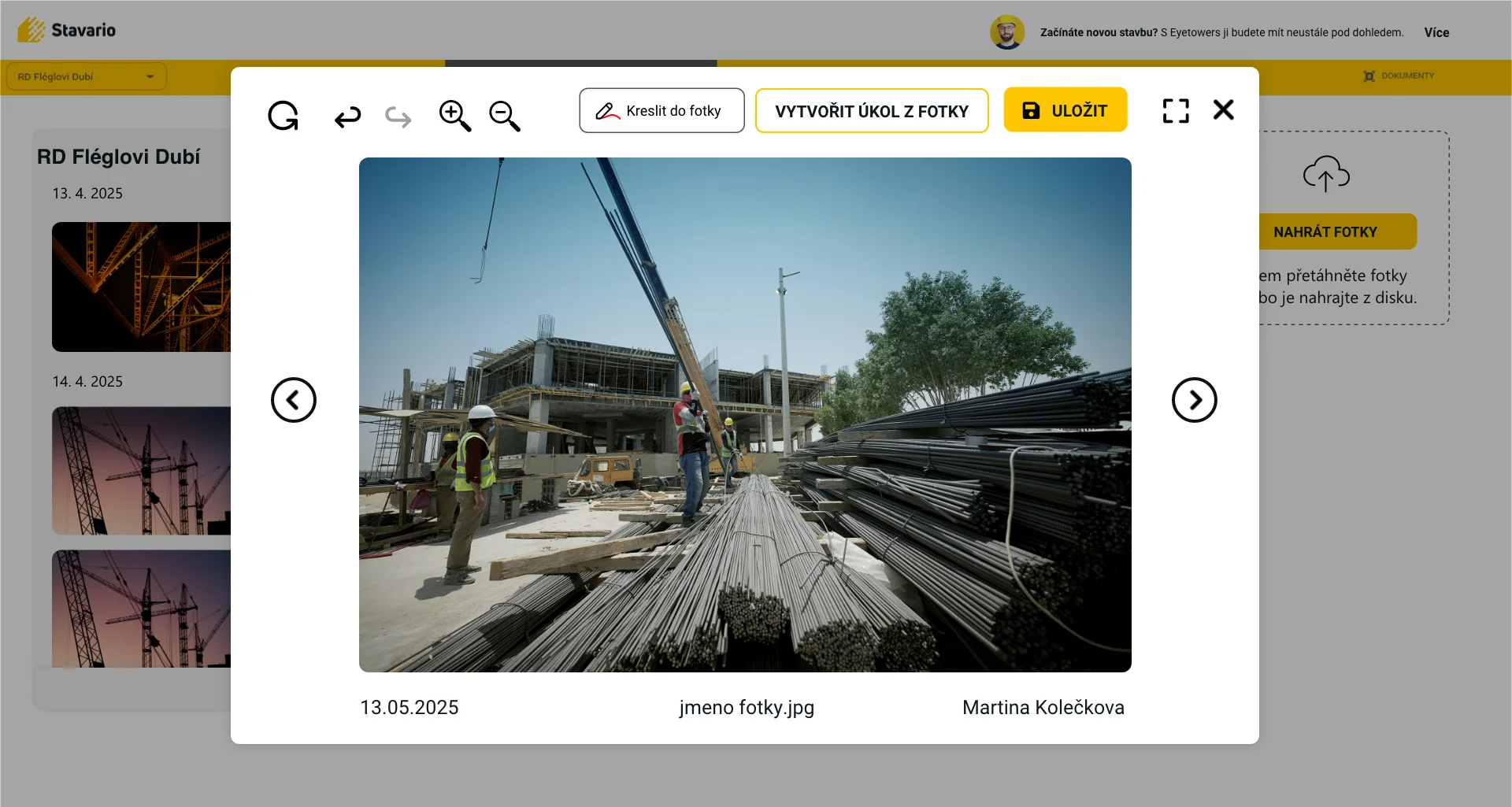
In Stavario, photographs can remain connected with the projects where they were created. They can support construction logs, tasks and other project records instead of existing only in private phone galleries or temporary chat conversations. That gives the photograph context from the beginning: the project provides the main frame, the date provides time and the related record provides purpose.
AI can use photos when helping prepare construction log content, and field workers can also send information into the construction log through WhatsApp where that is the easiest way to capture information from site. The main benefit is not simply that Stavario can store photographs, because cloud storage alone is easy to find. The value is that photos remain part of the construction record around the project they document, which makes them easier to use later. The wider picture is described on the construction management software page, and the selection process itself in the article on how to choose construction management software as a small contractor.
Do not search for the photo. Search for the project event
When construction images stay connected with the right project, date and record, the team does not need to remember who took them or which chat they were sent through.
Explore project documentation in Stavario
Build a small photo standard your team can actually follow
A photo standard does not need to be a twenty-page internal manual. For many contractors, five rules are enough. Photograph important concealed work before it disappears. For important conditions, take enough context to show both location and detail. Important photos belong to the project, not only to the photographer's phone. When a photograph documents a defect, correction or task, keep it connected to that event. And do not rely on somebody remembering later why the photograph was taken.
These rules are simple enough to use, and that matters. A theoretically perfect documentation standard that nobody follows creates less value than a modest process used on every project. The goal is consistency, not bureaucracy.
Run a six-month retrieval test
Take three real situations from completed or older projects: one concealed work photo, one defect or correction and one progress condition from a specific period. Ask somebody who was not directly involved to find them. Give only the project and the situation, then measure how long it takes.
Then ask another question. Can that person understand why the image matters without calling the original site manager? If yes, the photo documentation is doing its job. If not, the company should not start by demanding more photographs. It should improve the relationship between the photographs and the project information around them. Because the future value of site photography does not depend on how many images were created. It depends on how much meaning survived with them.
Will you still find the right photo six months from now?
Add photographs directly to a live project in Stavario and build the record while the work is happening instead of reconstructing it from phones and chats later.
Frequently asked questions
Josef Beneš
CEO Stavario
20+ years of experience in construction