
Tracking attendance on a construction site sounds simple. You need to know who arrived, when they left, and how many hours they worked. In reality, construction companies often need one more piece of information: where those hours were actually worked.
A worker may spend the morning on one project and move to another in the afternoon. A crew may change jobsites during the week. Office staff then need to turn that information into reliable records without rebuilding the month from paper sheets, spreadsheets, messages, and phone calls.
Construction site attendance software should make that process simpler. The goal is not only to replace a paper sign in sheet with an app. The real value is having attendance recorded close to the moment it happens and connected to the correct jobsite.
Construction attendance is different from office attendance
In a traditional workplace, employees usually come to the same location every day. Construction companies operate differently. Teams move, projects change, and one employee can work across several jobsites during the same period.
That means a record showing that someone worked eight hours may not be enough. The company often also needs to know which project those hours belong to.
This becomes increasingly important as the number of jobsites grows. With one project, a site manager may know everyone personally and remember who was present. With several projects running at once, the same information needs to be available to the office and management without depending on one person's memory.
Attendance therefore becomes part of project operations rather than a standalone HR record.
Paper works until somebody has to process it
Paper attendance sheets can work perfectly well on a small project. Workers arrive, their attendance is recorded, and the site manager has a clear overview of who is present.
The additional work begins later.
Someone has to collect the sheets, check them, identify missing information, and enter the data into another system. If the company manages several jobsites, the same process happens multiple times.
A missing departure time becomes a phone call. An unclear record needs to be checked with the site manager. A worker who moved to another project has to be assigned correctly. None of these tasks is particularly difficult, but together they create recurring administration every week or month.
Digital attendance becomes useful when information only needs to be recorded once and can then be used by the people who need it.
A spreadsheet is digital, but the process may still be manual
Excel is often the next step after paper. It provides structure, makes calculations easier, and is familiar to almost every office team.
But a spreadsheet only solves part of the problem if someone still has to enter all the information manually.
If attendance is first written down on site, sent through a message, and finally entered into Excel by the office, the company has a digital record but not a digital process. The same information has still travelled through several people before reaching its final destination.
The weaknesses become more visible as the company grows. One employee may be assigned to the wrong project, somebody forgets to record a departure, or a worker changes jobsites during the day and the spreadsheet no longer reflects what actually happened.
At that point the question is not whether Excel is good or bad. The question is how much time the company spends keeping it accurate.
What construction attendance software should actually do
The basic requirement is simple: record attendance reliably and associate it with the correct construction project.
Workers should be able to record arrival and departure without navigating through a complicated interface. Site managers need a clear overview of their teams, while office staff need data they can use without another round of manual transcription.
For companies with several active projects, it is particularly important that attendance can be viewed by jobsite. Knowing that an employee worked on Tuesday is useful. Knowing where they worked makes the information operationally meaningful.
Permissions also matter. A worker, site manager, office administrator, and company owner do not necessarily need access to the same information. A useful system should reflect these different roles without making everyday use unnecessarily complicated.
Mobile usability matters more than almost anything else
Attendance is created in the field. That makes the mobile experience one of the most important parts of the system.
If recording arrival takes too long, workers will avoid it. If finding the correct site is confusing, mistakes will appear. If the process requires several unnecessary steps, people will eventually find a faster workaround.
The best test is not a feature list. Give the application to someone who will actually use it and see whether they can complete the basic action without a long explanation.
The process should be fast enough to become part of the working day rather than another administrative task added to it.
A sophisticated back office dashboard has little value if the data entering it is incomplete.
Attendance should be connected to the jobsite
For construction companies, this is where attendance data becomes much more useful.
Knowing how many hours a worker completed is important. Knowing which project those hours belong to creates context.
When attendance is associated with a specific jobsite, the office does not have to determine the project later. Management gets a clearer picture of where people are working, and information can be used more easily in further company processes.
This also reduces dependence on personal knowledge. The office does not need to know that a particular worker was probably on another site on Wednesday because their usual project was closed. The information should already be recorded with the project.
As companies grow, this simple difference becomes increasingly valuable.
Multiple jobsites create the real challenge
A company with one team on one project has relatively simple attendance requirements. A contractor managing several crews across several sites has a different problem.
People move between projects. A site may need additional workers for a few days. Someone covers for a colleague. A crew finishes early and transfers to another job.
None of these situations is unusual. The challenge is keeping the information accurate without creating more office work.
When attendance data is fragmented, the office often has to reconstruct these movements at the end of the period. That is exactly the kind of repetitive administration that a construction attendance system should reduce, especially when attendance is part of wider construction management software.
The more mobile the workforce becomes, the more important the connection between a person, time, and project.
Do not make attendance more complicated than the work itself
When a digital attendance system is introduced, it can be tempting to solve every possible exception from day one. Breaks, overtime, approvals, different work patterns, transfers, special roles, and dozens of rules can all become part of the configuration.
Some companies genuinely need this complexity. Many do not need it immediately.
A better starting point is often to make the basics reliable. Who arrived? When? Where? When did they leave?
Once the company knows that people are using the system consistently and the data can be trusted, additional rules can be introduced where they create real value.
A theoretically perfect process that people avoid is usually less useful than a simple process they follow every day.
Attendance data is only valuable if the office can use it
The purpose of digital attendance is not to create a nicer record on the worker's phone.
The information needs to continue through the company.
Office staff may need attendance for internal reporting, payroll preparation, project evaluation, or other administrative processes. The less manual work required between the field record and the office, the more valuable the system becomes.
This is another reason why export options and access to attendance data matter. Companies should look beyond the initial check in action and ask what happens to the information afterwards.
A good field workflow can still create unnecessary office work if the resulting data is difficult to process.
When does a construction company need attendance software
There is no specific number of employees at which paper or spreadsheets suddenly stop working.
A more useful indicator is the amount of repeated administration.
If the office regularly waits for attendance records, corrects missing information, calls site managers, or manually assigns hours to projects, the current process is already creating overhead.
The number of jobsites matters as well. Ten people spread across four projects may create a more complicated attendance process than a much larger team working at one fixed location.
Growth makes these weaknesses more visible, but company size itself is not the main issue. The important factor is how much information moves between the field and the office and how much effort is required to keep it accurate.
How Stavario handles construction attendance
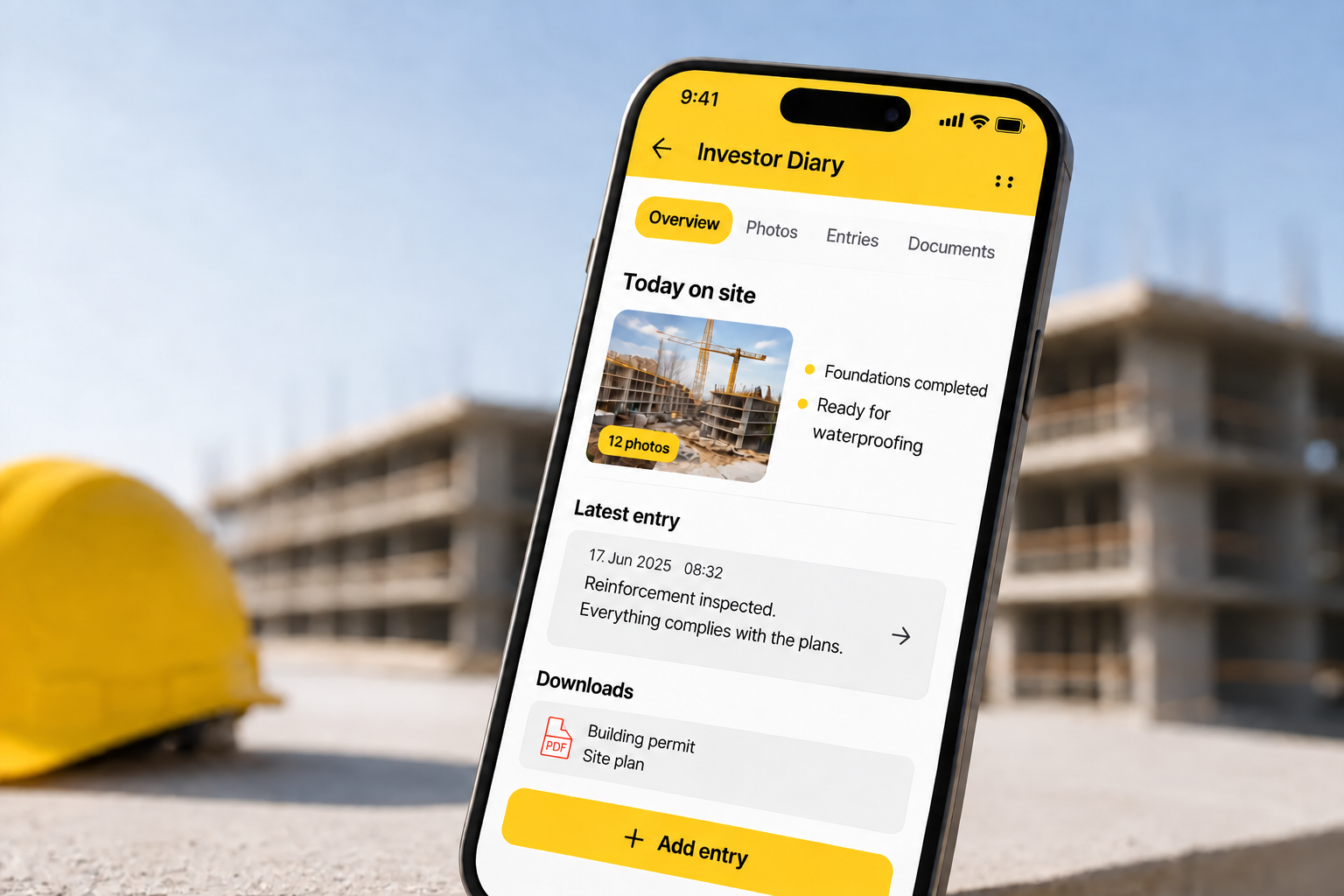
Attendance is one part of the broader construction operations environment in Stavario. Companies can work with people in the context of specific construction projects and keep information from the field available for further work in the office.
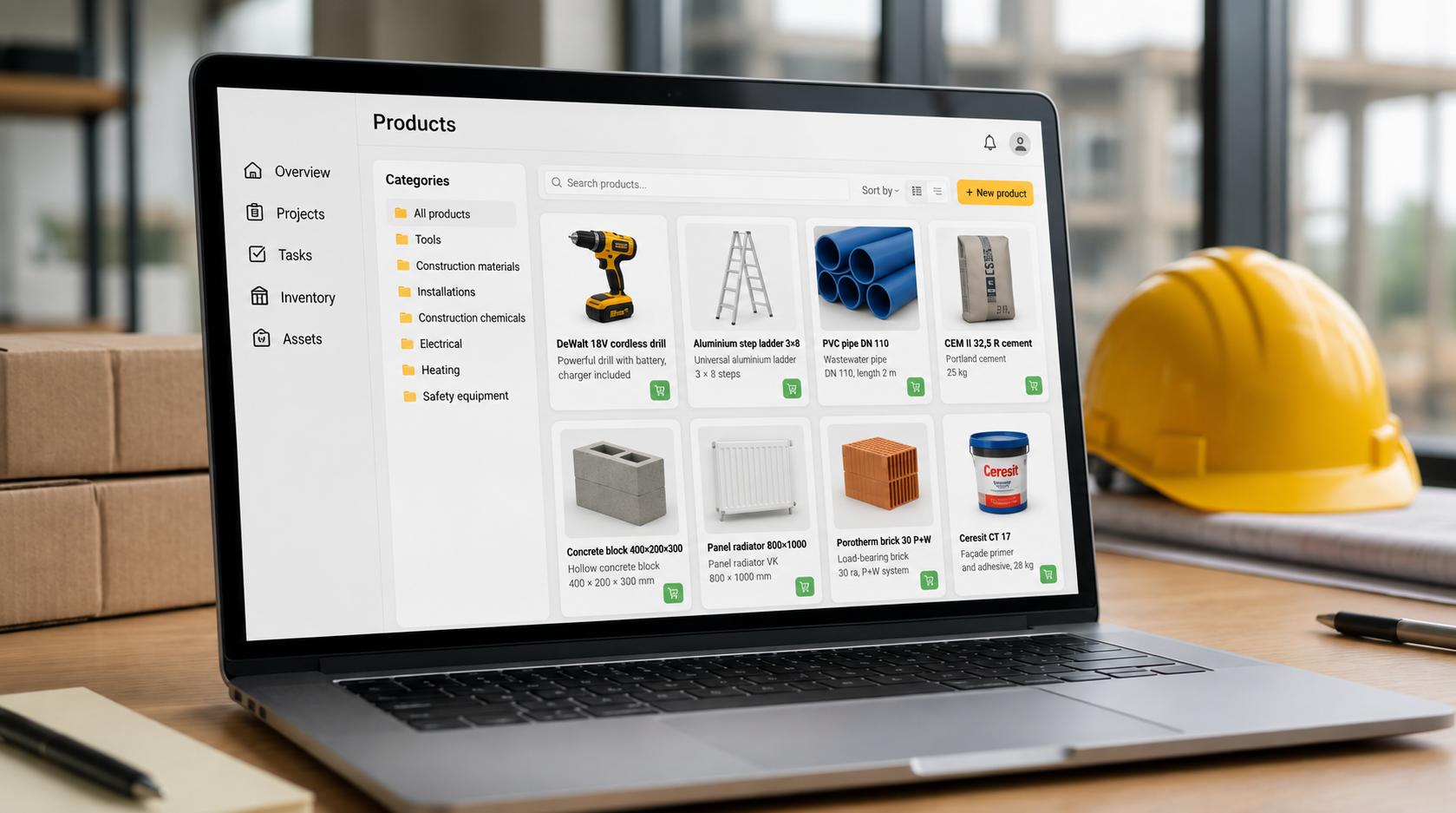
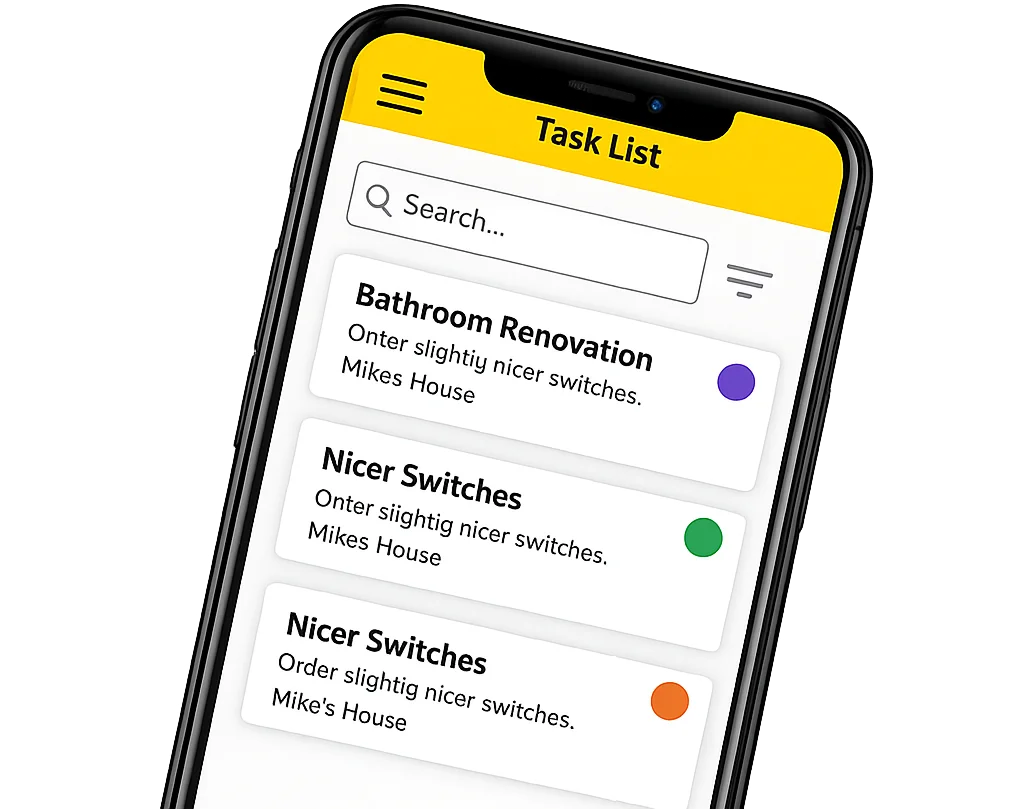
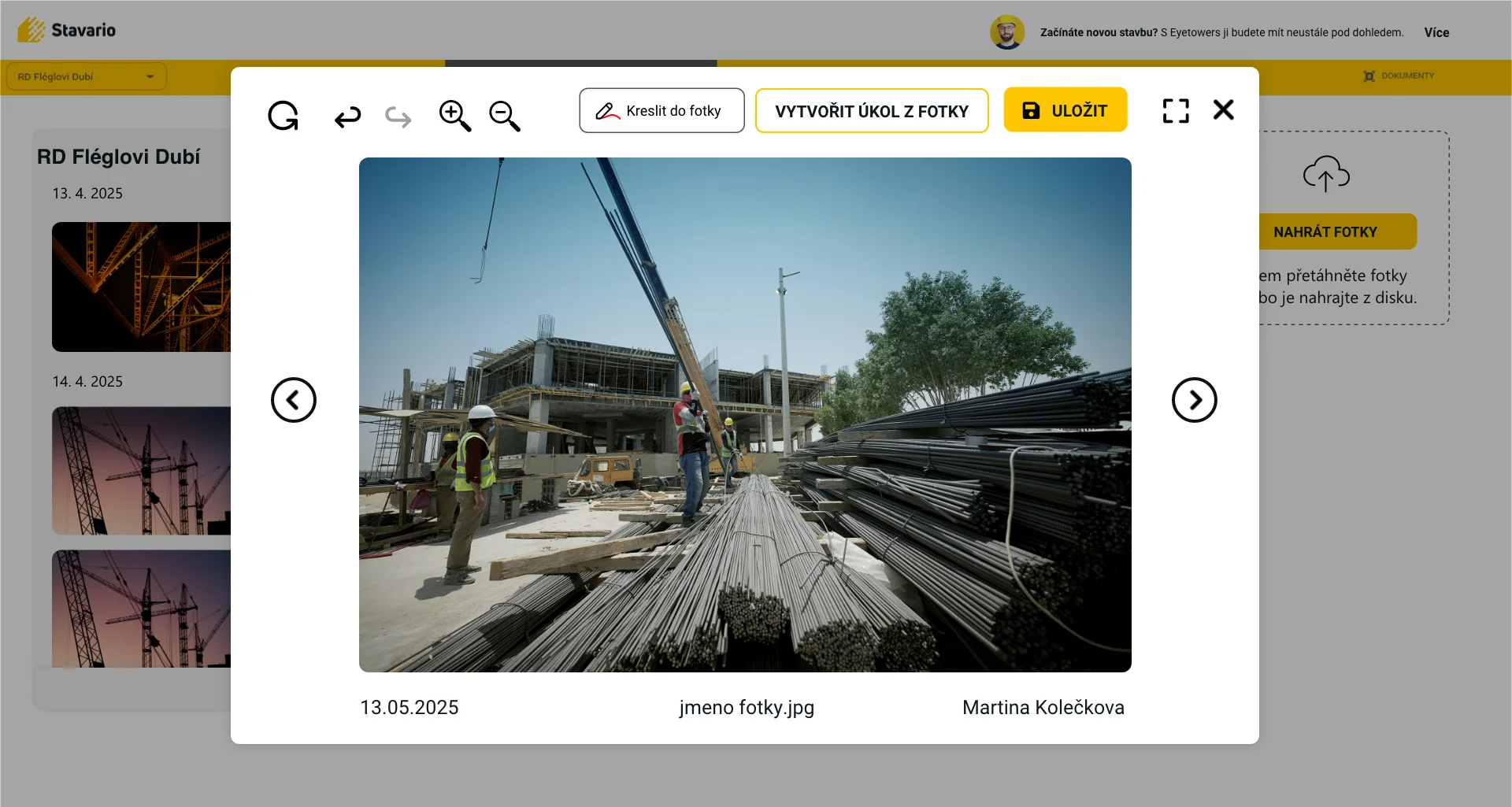
Stavario also covers other areas of everyday construction operations, including site diaries, tasks and requests, photo documentation, assets and tools, warehouses and materials, communication, and reporting.
This matters for contractors that do not want attendance to become another isolated application. The same company may already need to know what happened on a project, which tasks are open, where equipment is located, and what materials are available.
The purpose is not to put every business process into one application at any cost. It is to keep operational information that belongs to the same construction project closer together.
How to introduce digital attendance without disrupting the company
Start small.
Choose one project or one team and introduce a clear process for recording attendance. Make sure the people who actually use the mobile application understand what to do and that the basic action is quick.
Then observe the process for a few weeks.
Are workers recording attendance consistently? Does the office receive the information it needs? Are site managers correcting records frequently? Are there situations the original setup did not account for?
Use those findings to improve the process before expanding it across the entire company.
A successful attendance rollout should gradually eliminate work. If it creates a new stream of questions and manual corrections, something in the process needs to be simplified.
What to check before choosing construction attendance software
Before selecting a system, answer a few practical questions:
- How many active jobsites do we manage?
- Do workers regularly move between projects?
- Does attendance need to be assigned to a specific jobsite?
- Who records attendance and who needs to review it?
- How easy is the mobile check in and check out process?
- What happens when somebody forgets to record attendance?
- Does the office need to export or further process the records?
- Do different users need different permissions?
- Do we want attendance to remain standalone or be part of a broader construction management environment?
These questions help separate the features that look useful in a demonstration from the ones the company will actually depend on every day.
Summary
Construction site attendance is not only about recording working hours. For contractors managing several projects, the more important question is often where those hours were worked and how easily that information reaches the office.
Paper and spreadsheets can be completely sufficient for a small team and a simple operation. Their limitations become more visible when attendance has to be collected from several sites, manually checked, assigned to projects, and repeatedly corrected.
Good construction attendance software moves the record closer to the moment when the information is created. Workers record attendance in the field, the project context is preserved, and the office can work with the data without rebuilding it from several sources.
In Stavario, attendance is part of a broader environment for everyday construction operations. It can sit alongside site diaries, tasks, photo documentation, assets, inventory, and other information connected to the same projects.
Want a clearer overview of who is working on your jobsites?
See how attendance in Stavario helps construction companies connect workers with the projects where the work actually happens.
Explore construction attendance in Stavario
Related pages on Stavario
Frequently asked questions

Josef Beneš
CEO Stavario
20+ years of experience in construction